During my daily meander throughout Youtube, I came across this hillarious video!
Enjoy!
Sunday, August 31, 2008


Saturday, August 30, 2008
New Book on the Book of Mormon

John W. Welch of BYU has released a new and exciting book on the Book of Mormon entitled The Legal Cases in the Book of Mormon. In this new volume, published by the Neal A. Maxwell Institute for Religious Scholarship, Welch explores the trials and legal cases in the Book of Mormon (such as the trial of Abinadi) and attempts to show an ancient context for the reasoning, verdict, and cases presented in each trial. Welch covers many legal cases in this volume, and offers unique insights into all of them in the context of the ancient Near East and biblical law.
Welch is no stranger to Book of Mormon studies. He has written many articles on the Book of Mormon and the ancient world, including, most importantly, the importance of chiasmus in the Book of Mormon.[1] The reader is highly recommened to read his materials on the FARMS website.
The book may be purchased here: http://www.jrcls.org/book.php or here: http://www.byubookstore.com/ePOS?this_category=127&store=439&item_number=3258151&form=shared3%2fgm%2fdetail%2ehtml&design=439
[1] It was Welch who discovered chiasmus in the Book of Mormon while he was on his mission in Germany. To see the whole story, click here.
Monday, August 25, 2008
"First to Cross the Ocean"
As I was traveling by plane last month from New York City to home on a business trip, the National Geographic program playing in the built-in screen on the head rest in front of me was called "Naked Earth: Prehistoric Americans". If you have access to an archive of this show via your National Geographic subscription, I highly recommend it. Evidence examined in the last 20 years blows out of the water that antiquated and increasingly laughable notion that it was purely by the Bering Strait land bridge that only Asians arrived here and were the sole progenitors of the inhabitants found in 1492 by Columbus.
Another show along the same theme is scheduled to air on Thursday, August 28th. It is called "Naked Science: First to Cross the Ocean". My pet peeve about "establishment science" is that it is, perhaps unintentionally, condescending to ancient humans. It says that they were smart enough to do, think, and create many surprisingly sophisticated things, but not to lash together some logs and float across the ocean on currents. In "Prehistoric Americans", at least three probable routes were proposed for migration between oceans: Bering Strait, kelp "highways" extending along the coasts of the Pacific Rim, and a fishing route following the ice-to-sea interface of an ancient glacier in the North Atlantic.
Mormon scholars are often accused of a priori thinking based on inherent prejudices when forming conclusions about ancient history. It's true. We admit that. It's an inevitable part of human nature. But so-called "mainstream scientists" are no different in that they often fall prey to their own cultural biases.
According to establishment science, ancient humans were either stupid or blind. They were simply too primitive to have an original, inventive thought about anything. They had never seen a log float down a river and thought, "Gee, I wonder if I could sit on that and get from point A to point B a lot faster than walking." or "If I tie my cloak to a stick and spread it out, maybe I can use the wind to go even faster." According to the mainstream textbooks, the wheel didn't exist in America until the Spaniards brought it with them. Apparently, no ancient human living on the American continent had ever seen a rock roll down a hill and thought, "Hmm, if I carved that a bit and put a stick through it, like I do with arrowheads and obsidian clubs, I could wheel this pile of dirt on a platform easier than I can carry it in a basket."
If "First to Cross the Ocean" is as good as "Prehistoric Americans" at summarizing the latest research, I guarantee it will knock your socks off.
Another show along the same theme is scheduled to air on Thursday, August 28th. It is called "Naked Science: First to Cross the Ocean". My pet peeve about "establishment science" is that it is, perhaps unintentionally, condescending to ancient humans. It says that they were smart enough to do, think, and create many surprisingly sophisticated things, but not to lash together some logs and float across the ocean on currents. In "Prehistoric Americans", at least three probable routes were proposed for migration between oceans: Bering Strait, kelp "highways" extending along the coasts of the Pacific Rim, and a fishing route following the ice-to-sea interface of an ancient glacier in the North Atlantic.
Mormon scholars are often accused of a priori thinking based on inherent prejudices when forming conclusions about ancient history. It's true. We admit that. It's an inevitable part of human nature. But so-called "mainstream scientists" are no different in that they often fall prey to their own cultural biases.
According to establishment science, ancient humans were either stupid or blind. They were simply too primitive to have an original, inventive thought about anything. They had never seen a log float down a river and thought, "Gee, I wonder if I could sit on that and get from point A to point B a lot faster than walking." or "If I tie my cloak to a stick and spread it out, maybe I can use the wind to go even faster." According to the mainstream textbooks, the wheel didn't exist in America until the Spaniards brought it with them. Apparently, no ancient human living on the American continent had ever seen a rock roll down a hill and thought, "Hmm, if I carved that a bit and put a stick through it, like I do with arrowheads and obsidian clubs, I could wheel this pile of dirt on a platform easier than I can carry it in a basket."
If "First to Cross the Ocean" is as good as "Prehistoric Americans" at summarizing the latest research, I guarantee it will knock your socks off.
Sunday, August 24, 2008
Mormon Conspiracy Unvail'd!!
Pardon the indulgence into a bit of satire, but I heard the following caller on the Michael Medved radio show and couldn't help myself.
Michael Medved, who is Jewish, has been an outspoken defender of people of the LDS faith whenever callers to his show have tried to attack us. This video adaptation of a typical Michael Medved Show "Conspiracy Day" call from a few weeks ago is a classic that needs to be passed around as much as possible.
Michael Medved, who is Jewish, has been an outspoken defender of people of the LDS faith whenever callers to his show have tried to attack us. This video adaptation of a typical Michael Medved Show "Conspiracy Day" call from a few weeks ago is a classic that needs to be passed around as much as possible.
Why I (Rob) am a Book of Mormon Apologist
Steve posted his reasons for being a Book of Mormon apologist, and I now feel compelled to do so as well.
I had the privilege of serving an LDS mission in Guatemala. About 8 months into my mission, I purchased a children's copy of the Popol Vuh (if only to match my limited Spanish reading comprehension at the time). One of my district leaders, a fellow from Chiquimula, Guatemala, saw the book and asked me why I had purchased it instead of the full version. When I told him why, he asked me if I understood what it contained. I told him that it looked like any other Native American legend book to me and that I had read many like it in my rural Southwestern U.S. hometown.
He then proceded to school me in what the Popol Vuh means, or should mean, to Latter-day Saints who want to know more about Book of Mormon history. He said that contrary to what his Catholic and secular school teachers had taught when he read it in school, it wasn't just a book of random legends, writings, and mythologies. When read in the context of the Restoration of the Gospel, it was quite literally a fragment of the Gospel knowledge that remained of a post Nephite and declining Lamanite society. Its seemingly esoteric (rather, exoteric) ramblings actually corresponded to real and basic Gospel principles, but in a corrupted and apostate form.
With that in mind, I re-read the Popol Vuh book, with notes my district leader wrote in it to help with the translation into English and possible Gospel concepts, and was astonished at what I had missed. I have plans to make that the subject of another post (or two, or five) because it really is that interesting. But for now, let's just say that this was the catalyst that compelled me to study the Book of Mormon in more depth than ever before.
Toward the end of my mission, an Elder with whom I had come into the mission showed me a book called "The Title of the Lords of Totonicapan" that a local member had given him. I opened it, and with my considerably improved Spanish reading comprehension, was excited to find that it was another local Maya tribe's version of many of the same events and symbols found in the Popol Vuh. The "Title"'s author, during the Spanish conquest of the 1550s, made direct (but today often disputed) claims to a direct descendancy of his people from Israel.
The common linkages I began to see between these two books and Biblical and Book of Mormon concepts and doctrines began to galvanize my desire to fully study the additional physical evidences that must surely exist.
Since then, even though I make no claims to be any kind of professional or experienced anthropologist/archaeologist/ethnographist/etc., I have kept an eye out for anything and everything that might point to evidence of the Book of Mormon's claims. I marvel at the knowledge that has come to light and that experienced scholars such as Daniel Peterson and John Tvedtnes are able to build a solid foundation upon which these evidences can rest.
I want to categorically and undeniably state, at the same time, that I have a firm knowledge, completely independent and antecedent to the above experiences, that the Book of Mormon is true and exactly what it claims to be. Even if the Conquistadores had burned and destroyed every last vestige of Mesoamerican literature and monuments, the hard and simple truths of the book stand on their own, brilliantly testify of the Bible's authenticity, and teach and prophesy correctly of Christ. It is, as Joseph Smith taught, "the most correct of any book on earth". I testify that I have grown closer to God because of it.
I had the privilege of serving an LDS mission in Guatemala. About 8 months into my mission, I purchased a children's copy of the Popol Vuh (if only to match my limited Spanish reading comprehension at the time). One of my district leaders, a fellow from Chiquimula, Guatemala, saw the book and asked me why I had purchased it instead of the full version. When I told him why, he asked me if I understood what it contained. I told him that it looked like any other Native American legend book to me and that I had read many like it in my rural Southwestern U.S. hometown.
He then proceded to school me in what the Popol Vuh means, or should mean, to Latter-day Saints who want to know more about Book of Mormon history. He said that contrary to what his Catholic and secular school teachers had taught when he read it in school, it wasn't just a book of random legends, writings, and mythologies. When read in the context of the Restoration of the Gospel, it was quite literally a fragment of the Gospel knowledge that remained of a post Nephite and declining Lamanite society. Its seemingly esoteric (rather, exoteric) ramblings actually corresponded to real and basic Gospel principles, but in a corrupted and apostate form.
With that in mind, I re-read the Popol Vuh book, with notes my district leader wrote in it to help with the translation into English and possible Gospel concepts, and was astonished at what I had missed. I have plans to make that the subject of another post (or two, or five) because it really is that interesting. But for now, let's just say that this was the catalyst that compelled me to study the Book of Mormon in more depth than ever before.
Toward the end of my mission, an Elder with whom I had come into the mission showed me a book called "The Title of the Lords of Totonicapan" that a local member had given him. I opened it, and with my considerably improved Spanish reading comprehension, was excited to find that it was another local Maya tribe's version of many of the same events and symbols found in the Popol Vuh. The "Title"'s author, during the Spanish conquest of the 1550s, made direct (but today often disputed) claims to a direct descendancy of his people from Israel.
The common linkages I began to see between these two books and Biblical and Book of Mormon concepts and doctrines began to galvanize my desire to fully study the additional physical evidences that must surely exist.
Since then, even though I make no claims to be any kind of professional or experienced anthropologist/archaeologist/ethnographist/etc., I have kept an eye out for anything and everything that might point to evidence of the Book of Mormon's claims. I marvel at the knowledge that has come to light and that experienced scholars such as Daniel Peterson and John Tvedtnes are able to build a solid foundation upon which these evidences can rest.
I want to categorically and undeniably state, at the same time, that I have a firm knowledge, completely independent and antecedent to the above experiences, that the Book of Mormon is true and exactly what it claims to be. Even if the Conquistadores had burned and destroyed every last vestige of Mesoamerican literature and monuments, the hard and simple truths of the book stand on their own, brilliantly testify of the Bible's authenticity, and teach and prophesy correctly of Christ. It is, as Joseph Smith taught, "the most correct of any book on earth". I testify that I have grown closer to God because of it.
Sunday, August 17, 2008
Thursday, August 14, 2008
Shaken Faith Syndrome
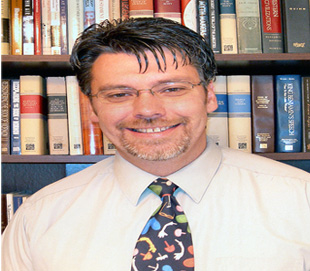

Have you ever had a shaken testimony? What about friends or family? If so, then Mike Ash (owner and proprietor of www.mormonfortress.com) has just the book for you. In this new volume entitled Shaken Faith Syndrome, Mike details some of the ways to strengthen one's testimony in the face of criticisms and doubt and offers introductions to some of the apologetic responses to hard questions about the Book of Mormon and the Book of Abraham, Joseph Smith & Brigham Young, Church history and doctrine and dealing with cognitive dissonance (or thought disharmony).
The book is basically divided into two sections. The first section is an introduction to dealing with doubt and criticisms of the Church and includes the following chapters:
1. Dealing with Doubt
2. Ex-Mormons, Critics, and Fundamentalist Assumptions
3. Unrealistic Expectations of Prophets
4. Confusing Tradition with Doctrine (This section can be read online here.)
5. Paradigms, Evidence, and Imposing Our Views on Others
6. Scholarly, Historical and Scientific Limitations & Unrealistic Expectations
7. Betrayal and Church "Cover-up"
8. Adding Cognitions (Beliefs)
9. Anti-Mormon Disdain for LDS Scholarship and Apologetics
10. Summary to Part 1: "The Answers Are Out There"
While Mike has something to offer in all of these areas, chapter 6 was my favorite. In this chapter, Mike points out several things which includes:
1. That anti-Mormons rarely deal with real LDS scholarship and instead rely on straw men most of the time.
2. That, contrary to anti-Mormon allegations, LDS scholars are real scholars with real degrees from prestigious universities.
3. That LDS scholars are widely accepted in mainstream academia and their works are often cited favorably by non-LDS scholarly venues.
4. That a number of non-LDS researchers are coming to recognize aspects of LDS scholarship.
Part two of Mike's book then tackles some of the issues raised by anti-Mormons or critics and includes chapters on the following:
11. Joseph Smith, Abraham, and Modern Egyptology (This is a section on the Book of Abraham that I highly recommend be read)
12. Anachronisms: The Wrong Things at the Wrong Times
13. Book of Mormon Geography
14. Book of Mormon Textual Changes
15. DNA and the Book of Mormon
16. Fulness of the Gospel
17. Joseph's Environment and the Book of Mormon
18. Others in the Book of Mormon
19. Reformed Egyptian and Book of Mormon Languages
20. Who are the "Lamanites"?
21. The Book of Mormon Witnesses
22. Journal of Discourses
23. Kinderhook Plates
24. Plural Marriage
25. The Temple (This is also a good chapter that I highly recommend)
26. The First Vision
27. "Magic", Treasure Digging, and the Young Joseph Smith
28. Part II Summary: Conclusions
There is much that could be said about this wonderful book, but I will let the reader see for him or herself. All in all, it is a fine volume that offers a good introduction to Mormon apologetics and is an excellent resource in helping strengthen one's (as well as one's family and friends) testimony in the face of criticisms and doubt.
Wednesday, August 13, 2008
Article(s) of the Week: Matt Roper on Pre-Columbian Populations and the Book of Mormon
"In 600 BC there were probably several million American Indians living in the Americas. If a small group of Israelites, say less than thirty, entered into such a massive native population, it would be very hard to detect their genes today." - Simon Southerton, leading critic of the Book of Mormon based on DNA research.
Matt Roper, a scholar at the Neal A. Maxwell Institute, has written extensively on Book of Mormon issues. One of my favorites that I just read recently comes from the FARMS Review and covers two topics; 1) treatments on Book of Mormon geography from past LDS researchers and leaders and 2) whether or not the Book of Mormon talks about there being "others" than the Nehpites, Lamanites, Jaredites and Mulekites.
One of the key criticisms against the Book of Mormon based on DNA evidence is as follows:
1. The Book of Mormon claims that the Western Hemisphere was empty of native populations when Lehi and his family arrived.
2. This means that the peoples described in the Book of Mormon must therefore be the ancestors of modern Native Americans.
3. DNA has disproven that Native Americans come from a Middle Eastern background (as the Book of Mormon claims)
4. This means that the Book of Mormon is false, etc.
Furthermore, the critics contend, LDS scholars have been backed into the corner of a Limited Geography for the Book of Mormon because of DNA and any attempt to correlate the Book of Mormon in a small, localized area in Mesoamerica is not only ad hoc but also at odds with previous LDS leaders opinions on Book of Mormon geography.
As Matt Roper shows in this article, however, such reasoning is unfounded. First, Roper demonstrates that the idea of a Limited Geography for the Book of Mormon - which would entail the peoples described in the Book of Mormon intermarrying and intermingling with native populations - is nothing new. From the days or Orson Pratt in the late 1800's, LDS researchers have been postulating a Limited Geography. And while it is true that a popular interpretation of Book of Mormon geography amongst Latter-day Saints (including high ranking LDS leaders) has been to assume that the Book of Mormon events took place all over North and South America with Lehi as the ancestor of every single Native American, Roper shows how this interpretation has been seriously challenged by LDS researchers for decades.
Roper further goes on to write how the Book of Mormon gives clues and hints throughout its pages that Lehi and his family quickly began interacting with native populations and how the Nephite and Lamanite cultures quickly became assimilated into already existing Mesoamerican cultures and populations. As a matter of fact, Roper shows, the terms "Nephite" and "Lamanite" do not necessarily carry hereditary meanings but can also convey socio-political identifications and meanings.
In short, Roper concludes, there are just too many factors to deal with before we can safely test the Book of Mormon on DNA grounds. So, for a fascinating read and some very exciting insights, I recommend Matt Roper's essay as this article of the week.
Tuesday, August 12, 2008
Kerry Shirts on the Book of Mormon Witnesses
My favorite online apologist, Kerry Shirts (aka the Backyard Professor), has produced some new videos on the Book of Mormon 3 & 8 Witnesses and a refutation of critical charges of fraud or delusion on the part of the witnesses. Furthermore, the works of Richard L. Anderson, specifically his book Investigating the Book of Mormon Witnesses and his many articles on the Neal A. Maxwell Institute website are strongly recommended as further reading on this subject.
Video 1
Video 2
Video 1
Video 2
Sunday, August 10, 2008
The Second Book of Nephi (2 Nephi 1)

 The Second Book of Nephi carries us fully into the new and promised land we now know to be the Americas. This book, like 1st Nephi, holds many prophecies about the Western hemisphere. In chapter 1, we also learn more about Israel being scattered and a last effort by Lehi to invite Laman and Lemuel to repent.
Lehi was the patriarch or oldest living male of the group. The word "patriarch" is of Greek derivation and means father-ruler; the Hebrew word it translates is simply father. Lehi held the priesthood "after the holy order of the Son of God", or, for short, the Melchizedek priesthood. It was the same priesthood authority held by Adam, Melchizedek, Abraham, Isaac, Jacob (Israel), and Moses. As such, it held the keys (or permission) to give father's blessings such as what Issac gave to Jacob and Esau and what Jacob (Israel) gave to his twelve sons.
In 2 Nephi chapters 1 through 4, Lehi gives a father's blessing to the following (in order of mention by chapter):
- Laman - chapter 1
- Lemuel - chapter 1
- Sam - chapter 1
- Sons of Ishmael - chapter 1
- Zoram - chapter 1
- Jacob - chapter 2
- Joseph - chapter 3
- Children of Laman - chapter 4
- Children of Lemuel - chapter 4
- Children of Sons of Ishmael - chapter 4
- Children of Sam - chapter 4
- The order of blessings follows that of Hebrew tradition--that is from oldest to youngest--with the exception of the Children of the Sons of Ishmael and the Children of Sam switching places in the age hierarchy. That Joseph Smith, if he had made it all up out of his head, didn't simply go the easier route and just list these descendants in the same order as their fathers is striking. One wonders if perhaps Ishmael's sons' descendants were somehow, on average, older than the children of Sam.
- Zoram and the sons of Ishmael were not Lehi's blood descendants. They receive the father's blessing from Lehi because Ishmael had passed away at Nahom, back on the Arabian peninsula, and Zoram had joined the group as part of an oath to Nephi without his own father accompanying him.
- Lehi doesn't specifically address Nephi. He really only makes reference to Nephi when comparing to and contrasting with Nephi's blessings the blessings that others will receive. There isn't much in the text to suggest why this is the case. One might suppose that Nephi was simply too modest to include his own blessing in these chapters, or that he felt it was sufficiently covered in his own written prophecies.
In chapter 1, Lehi also rejoices in his own blessings:
- "the mercies of God in sparing their lives, that they were not swallowed up in the sea"
- "how amerciful the Lord had been in bwarning us that we should flee out of the land of Jerusalem"
- "had we remained in Jerusalem we should also have eperished"
- "we have obtained a aland of promise, a land which is bchoice above all other lands; a land which the Lord God hath ccovenanted with me should be a land for the inheritance of my seed"
- "they shall serve him according to the commandments which he hath given"
- "if iniquity shall abound ccursed shall be the land for their sakes, but unto the righteous it shall be blessed forever"
- "this land should be akept as yet from the knowledge of other bnations; for behold, many nations would overrun the land, that there would be no place for an inheritance"
- "binasmuch as those whom the Lord God shall bring out of the land of Jerusalem shall keep his commandments, they shall cprosper upon the face of this land; and they shall be kept from all other nations, that they may possess this land unto themselves"
- "when the time cometh that they shall dwindle in aunbelief...if the day shall come that they will reject the Holy One of Israel, the true bMessiah, their Redeemer and their God, behold, the judgments of him that is cjust shall rest upon them"
Subscribe to:
Posts (Atom)